The Ocean

It’s worth taking a moment to recognize that the ocean is present in the middle poem, “Cypress Trees.” Present by not being present.
The ocean has a magnetic pull on my family. My father was born in San Demas, in the Los Angeles basin. His father Vere moved the family to Santa Barbra after a fire destroyed their home.
Most of Dad’s childhood stories, and there are many of them, occur in Santa Barbra. The ocean was where he learned to water ski and where he learned to surf. It was the ultimate call to his curiosity and the ultimate mitigator of his mischief.
Then Vere moved the family to Chico in Sacramento Valley.
A little less than two hours from Sacramento and about three hours from San Francisco (if the traffic is good, which it isn’t), Chico is at least four and a half hours from any respectable beach. At least. Dad left as soon as he could and went back home.
Then Dad returned for the woman who would be my mother and he stayed.
He pined for Santa Barbra, though. We went there on occasion, but it was at least eight hours away. I’m talking solid driving, not the kind of driving that you do with a wife and two sons, one of whom is a budding poet who has to pee every thirty minutes.
So it was to the north coast we went, dark and foggy, cold. We spent a lot of time in Fort Bragg, but those times became less as I grew older and the financial situation for the family grew tighter.
Then I too began to pine for the coast. Or sort of. What I really wanted was rain. Fog was a close second. Anything but California’s perpetual drought—its suffocating summers, its cracking winters. So my yearning is a bit more convoluted. I’ll have to deal with the rest of it later. Suffice it to say, I left for Oregon.
But I too returned to Chico with a budding family. We went to the coast more and more often until we were spending time there once a year, thanks in large part to my Aunt, my father’s older sister, who I’ve always seen as a kind of family angel (if there is such a thing). Even if there isn’t such a thing, or especially if there isn’t such a thing, my aunt is that angel.
But time moves on and you never gain from it. You always lose. Whether it is wealth, friends, or love, time is pitiless.
So here’s to the ocean. If you get close enough to it, you will understand how strong it is and how weak you are, or you will die in your foolishness. But maybe that doesn’t say much for wisdom because even the wary ultimately succumb. It’s just a matter of time.
~
Before and After
Before it happened, we walked on the beach
close to small dunes topped with tufts of yellow grass.
The flattened plain of sand tilted
its shimmer of dark to high white surf
that tumbled and clashed a relentless ride to shore.
We didn’t think anything of it.
Even when one or two glassy slicks of tide
rushed up to hiss at our feet,
we didn’t think anything of it.
After it happened, we lifted Raymond
out of the small pool the ocean had left behind
and set him down where sand was still dry and yielding.
I knelt behind him, and he leaned against me,
shivering, now one of the ocean’s dregs.
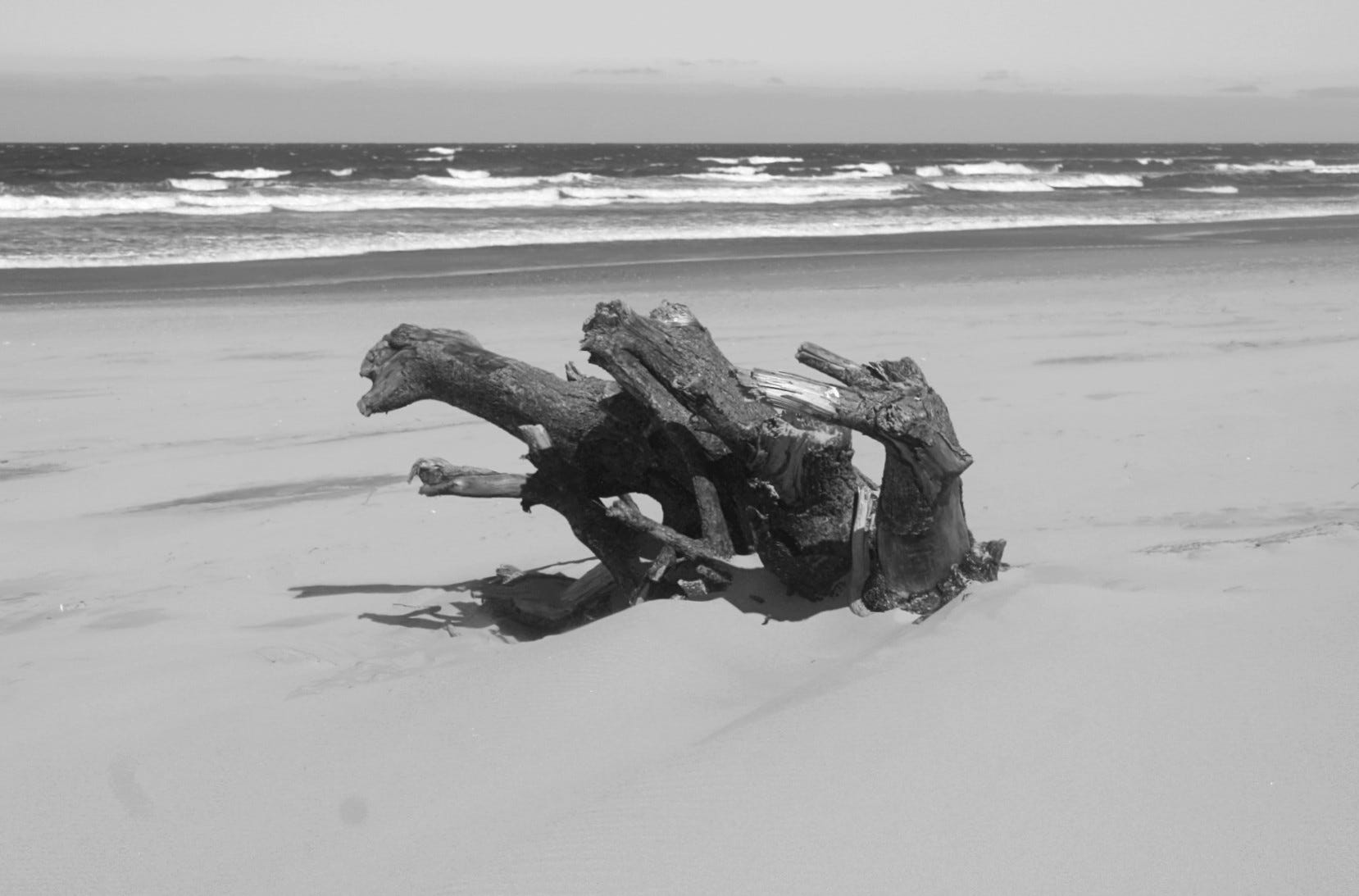
The log had come to rest some distance beyond us.
We watched
waves stack and roll as they had always done,
tides shoot up the beach as they had always done,
carrying not a granule’s worth of compassion,
not even the concern a malicious person has
for hitting the target at which he aims.
Someone said the ambulance had arrived.
Four paramedics came up the beach,
and one of them shielded Raymond’s eyes
as they began to peel his sock
off his sand-speckled shin
and carefully around the bulge above his ankle
because if bone had pierced skin,
he didn’t want its jagged thrust
to wedge open the fracture
still tearing in his mind.
Cypress Trees
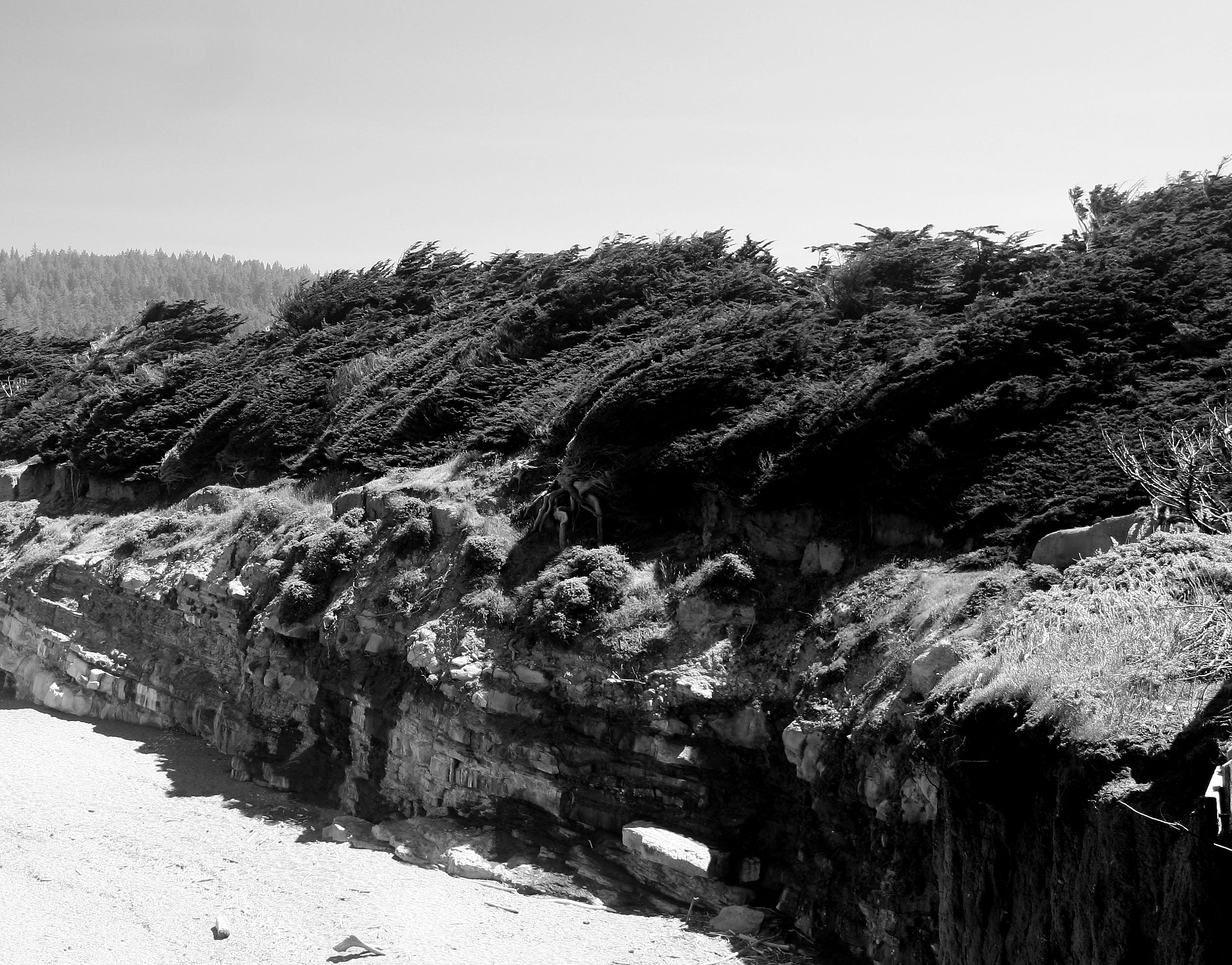
Father tied chain to stump,
hitched it to the International.
Engine revved, and the truck,
brown and square, lurched. Links
caught each other to the sound
of change dropped in a bucket,
vibrated tension of two wills.
Grandfather, tall and straight,
stood by and stared
at dug up ground, white
marks of axe in black roots,
and the shaking boughs of fear.
Let Miles
Let miles call the distance that you’ve gone
down the hot valley, skirting the bay
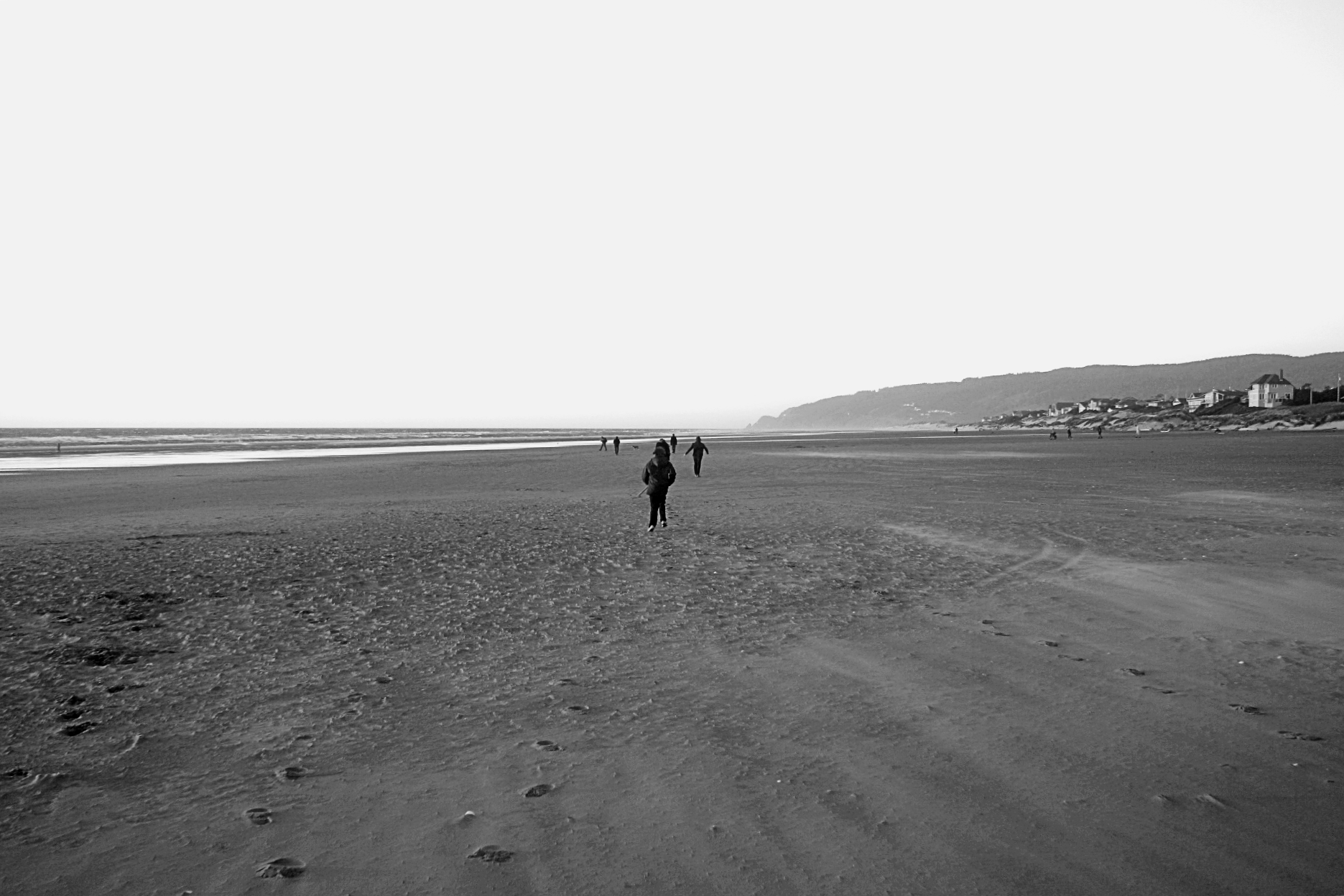
to Monterey’s long white curve of imprints.
I went there once, quiet and young, careful
not to look too long into anyone’s eyes,
careful to pull down the edge of my smile.
Or am I describing you? On manhood’s
shadowy verge, maybe it was you who
walked the row as evening took the sky,
who laughed and called out to friends running
and hiding on the red bridge that arced
through the onset of darkness, who went still
and wary of eyes that shift quickly to scorn.
Once even I might have been like you.
The wind still blows cold off the water.
We buttoned our jeans jackets and huddled
against the jetty together, waiting
for the van to come.
Again, I wait
as unsure of how you will return
as I was of how I’d be received.
My youth is sand scraped blank by tide.
Let miles call the distance that you’ve gone,
and I’ll dream your soul walking halves of a circle
that meet when at last you stand.